Thursday, 28 February 2008

ECONOMY

BMW is suffering of bad economic health


BMW, the world's largest premium carmaker, will cut more than 8,000 jobs as it attempts to make radical savings.
The German carmaker also held up the threat of more job cuts in the future if the euro continued to strengthen above $1.50.
The majority of the job losses will come in Germany, in what is a shock at the company that has been an enduring success story. About 2,500 permanent jobs and 5,000 temporary positions will go there.
BMW wants to cut a further 600 permanent jobs overseas as it tries to make annual cost savings of €500 million (£381 million) immediately and €6 billion by 2012. In December BMW said that it would need to restructure to turn around its profitability. BMW has a total workforce of 80,000.
The IG Metall union called the announcement unnecessary. Werner Neugebauer, the union's chief in Bavaria and a member of BMW's supervisory board, said that Ernst Baumann, the carmaker's head of personnel, “appears to think he has to play the agitator in order to be able to push up the share price by leaving the work force in a state of permanent insecurity”.
Of BMW's 28,000 overseas employees, the 600 job cuts are likely to fall at its sales subsidiaries. Mini, BMW's successful operation at Oxford, and its Hams Hall engine plant near Birmingham are not thought likely to be affected.
BMW has increased its use of temporary workers in order to scale its workforce up and down. The company will increase flexible working across its operations, including partial retirement, so that it can boost employment in busy periods. The group said that it needed to boost its productivity per worker.
BMW has been hit by the weakness of the dollar in its exports, although it has a factory in South Carolina making SUVs and its Z4 Roadster. BMW unveils its annual profits on March 18.
Last year pre-tax profit excluding exceptional items increased 3 per cent to €4.12 billion.

hey fellows: this is my first article

The New Treaty Was Signed, What Is Next?

The new treaty, called Reform Treaty, was signed by the Heads of State or Governments of the 27 member states in Lisbon on 13 December 2007.As it is known before The Reform Treaty, The EU Constitution had been prepared within 2.5 years by the Convention of the Future of Europe established by the European Council. After having prepared the draft Treaty by this Convention, it was signed by the member states on 29 October 2004.

However in the ratification process, the treaty was rejected by France and Netherlands in referenda. Therefore the new treaty could not come into force. After this unsuccessful attempt, in Brussels Summit held on 21-22 June 2007 it was decided that new Intergovernmental would be held on 23 July 2007, even though the EU constitution had been ratified by the 18 member states of the EU. The Conference held as it was planned and a new draft treaty called Reform Treaty prepared by Portuguese EU Presidency had been negotiated until 3 October 2007.Consequently after having reached compromise between members, the Reform Treaty was signed.
Having looked at the main differences between the Reform Treaty and the former one, if the constitution had come into force, it would have replaced the whole treaties signed by member states. Whereas the new treaty amends the Treaty on the European Union (Maastricht) and the Treaty Establishing the European Community (Rome). It also drops all reference to the symbols of the EU - the flag, the anthem and the motto - though these will continue to exist.
There are several amendments will come in to force with the new treaty. For instance the period of presidency will be extended to two-and-a-half years, replacing the current system where countries take turns at being president for six months. Secondly although the positions such as Foreign Affairs Supreme and External Affairs Commissioner existing provisions will remain the Reform Treaty, they will use more clout and represent the EU in the world stage. Thirdly there will smaller European Commission, with fewer commissioners than there are member states, from 2014.Fortly redistribution of voting weights between the member states, will be phased in between 2014 and 2017.The European Parliament, The European Commission and The European Court of Justice which represent the supranational character of the European Union will be empowered. And lastly some national vetoes areas will be removed. Furthermore with regards to enlargement Reform Treaty cites criteria decided by Heads of States or Governments.
To sum up with all these features the Reform Treaty will aim to have modern institutions and to optimise working methods in order to tackle both efficiently and effectively today's challenges in today's world. However because the ratification process hasn’t finished yet, this treaty might share the same destiny as its successor.


Ahmet Conker

Cannes International Film festival


Cannes Film Festival


The most famous international festival of the film occurred since more than 60 years in a city inthe south of France called Cannes
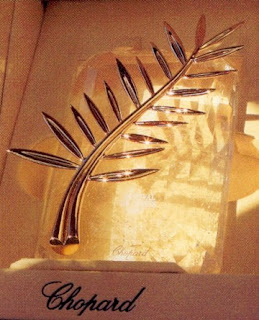
This festival is becoming famous for his notoriety and for the famous “Golden Palm” which is the highest prize given to a competing film at the Cannes film festival. If you are free the last 10 days of May you should have to take a plane and go to Cannes

The famous golden palm


To beginning let me tell us about The history of this festival
In 1939 the French education Minister proposed the creation of a world film event in France. The city of Cannes was chosen for " its charming frame". Then, on September 20th in 1946, the former “Casino de Cannes” welcomed the first international Festival.

It was the first big international cultural event after the war. The only two exceptions to disrupt the festival were both 1948-1950 for lack of budget and 1968 due to political turmoil in France.

At the outset, the festival was principally a tourist and social event and virtually of the screen walked off a price. However nowadays the festival become more and more popular and more and more producers want to present their film so the competition is more difficult. One example of this is that there are more than 4000 journalists whose come here to watch the films and critics it and more than 1600 media companies ...


How does the festival works ?

Every year you can present your new film at the jury of the year even if it’s your first one. If you want that your film is selected, its shooting must have been finished less than twelve months before the Festival and he must have been exploited only in his country of origin. Besides, he must not either have been presented in another international Festival.


If your film has all those qualities, you can present him self.
If you are student in the cinema, you can also come to Cannes as a cinephile student, and have the possibilities to watch some movies. It’s important to say that to have access to the film you never have to pay. It’s just by invitation.


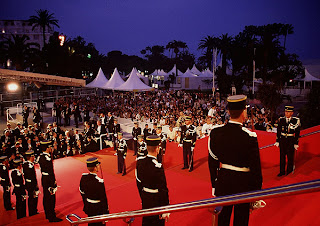
The famous red carpet ....
This carpet is very famous for the presence of lot of famous star in the top. 60 years of festival and more than Grace Kelly and other members of the Principality of Monaco, lot of famous
international actor/actress
Penelope Cruz, Georges Clooney, Brad Pitt ,Angelina Jolie Tom Hanks, Monica Bellucci, Bruce Willis, Robert De Niro, Pedro Almodovar Morgan freeman, Leonardo Di Caprio, sone french actor/actress like Sophie Marceau, Jean Reno,... And lot of more
Producers Quentin Tarentino,(Kill Bill) Michael Moore (sicko), Gus Van Sant(Elephant, Paranoid Park) Brothers Cohen (No country for old men) Tommy lee Johnes
singers or groups like Michael Jackson, U2, Avril Lavigne


The 6 last gold palm winner:

  • 2002
    The Pianist
    Roman Polanski
  • 2003
    Elephant
    Gus Van Sant
  • 2004
    Fahrenheit 9/11
    Michael Moore
  • 2005
    The Child (L'Enfant)
    Luc and Jean-Pierre Dardenne
  • 2006
    The Wind That Shakes the Barley
    Ken Loach
  • 2007
    4 Months, 3 Weeks and 2 Days (4 luni, 3 săptămâni şi 2 zile)

first article

The New Treaty Was Signed, What Is Next?

The new treaty, called Reform Treaty, was signed by the Heads of State or Governments of the 27 member states in Lisbon on 13 December 2007.As it is known before The Reform Treaty, The EU Constitution had been prepared within 2.5 years by the Convention of the Future of Europe established by the European Council. After having prepared the draft Treaty by this Convention, it was signed by the member states on 29 October 2004.

However in the ratification process, the treaty was rejected by France and Netherlands in referenda. Therefore the new treaty could not come into force. After this unsuccessful attempt, in Brussels Summit held on 21-22 June 2007 it was decided that new Intergovernmental would be held on 23 July 2007, even though the EU constitution had been ratified by the 18 member states of the EU. The Conference held as it was planned and a new draft treaty called Reform Treaty prepared by Portuguese EU Presidency had been negotiated until 3 October 2007.Consequently after having reached compromise between members, the Reform Treaty was signed.
Having looked at the main differences between the Reform Treaty and the former one, if the constitution had come into force, it would have replaced the whole treaties signed by member states. Whereas the new treaty amends the Treaty on the European Union (Maastricht) and the Treaty Establishing the European Community (Rome). It also drops all reference to the symbols of the EU - the flag, the anthem and the motto - though these will continue to exist.
There are several amendments will come in to force with the new treaty. For instance the period of presidency will be extended to two-and-a-half years, replacing the current system where countries take turns at being president for six months. Secondly although the positions such as Foreign Affairs Supreme and External Affairs Commissioner existing provisions will remain the Reform Treaty, they will use more clout and represent the EU in the world stage. Thirdly there will smaller European Commission, with fewer commissioners than there are member states, from 2014.Fortly redistribution of voting weights between the member states, will be phased in between 2014 and 2017.The European Parliament, The European Commission and The European Court of Justice which represent the supranational character of the European Union will be empowered. And lastly some national vetoes areas will be removed. Furthermore with regards to enlargement Reform Treaty cites criteria decided by Heads of States or Governments.
To sum up with all these features the Reform Treaty will aim to have modern institutions and to optimise working methods in order to tackle both efficiently and effectively today's challenges in today's world. However because the ratification process hasn’t finished yet, this treaty might share the same destiny as its successor.


Ahmet Conker

Rythmique gymnastics


Rhythmic gymnastics is a sport reserved exclusively for women, however in some countries you can see men who take part in that sport but it’s very uncommon .
This sport can be practiced since young ages which is called baby-gym.
It’s only from the age of 8 that the children can take part in a competition.
This sport is more and more known now, and especially in the year of the Olympic games.
In all the countries in the world you can find Rhythmic gymnastics clubs.

How does this sport work ?
It’s an artistic sport, in this discipline you have 6 sub-disciplines, 5 with engine and one free hand.

what to carry ?

The official holding is to wear an justaucorp.
Since 2001 you are allowed to add a Short skirt. And the best one is to create your own one ...
At your imagination!

The Engines


The ruban


The bludgeon


The Hoods


The cord


The Ball

Each gymnast has to be able to do each engine. She will learn all the technique.

As it concern the competition...
Each gymnast is in one level defined in the first time by their age like the other sports.
Hatchling (8/9 the years)
The Youngest children(Juniors) (10/11 the years) - The Juniors (12/13 the years)
The Younger children (14/15 the years)
The Juniors (16/17 the years)
Seniors (18 years and +)

In complement of that you have other categories of level, but it depends on your experience...

Before to be able to go in competition you have to pass formation cup, in four years if you don’t failed, then there is a lot of different kind of levels (individual or by equip.)
And in each level, you have to present an enchainment between 45 seconds to 3min (depend on what level you are), and between one and four engine ...

How does work a Normal year ?

A year of gymnastic rhythmic is full of competition,
the first one is the departmental one, the second one is the region one, the third one is zone one and the last one is the Championship of the country...
In order to be selected for the following, one you have to arrive in a good place in the competition...
To take part in a competition as an audience is a very nice experience. I really advice you to go.

When you participate in a competition, each club has a real solidarity...
and each club hopes to be in the podium, which makes them famous

Now you know the most important features about this sport!!
Maybe you will give the urge to your little sister or your futures kids to practice this kind of sport!


TRAVELING AROUND THE WORLD !!


The Finland


How to go in Finland since England.
The most practice is to go by plane since London Heathrow. You can Find lot of choice of plane since that website for example:
http://travel.kelkoo.co.uk/c-172201-flights.html

However it exist an other possibility to go in Finland and I really advice you to test this one.
If you come from England, take a plane to Stockholm in Sweden , or Copenhague in Denmark And then take a ferry
For the company Silja line or Viking line.


This solution is a bite more expensive, but it’s a very good experience. That boats are totally equipped for you, Restaurants, bars, pubs, casinos, super market duty free(in specially for the alcohols),… everything to divert your self.

After having choosing your way of transporting, you can spend how much time that you like in the country of the Santa Claus and the winner of Eurovision TV program 2006!


Information of the country

Flag:
Finland Member of The UE since 1995
Population: 5 269 173 habitants in 2006
Language : Finnish (Suomi) but every body can speak English.
Capital: Helsinki
Money: Euros since January 1st 2002


Winter Time
I think It's the best season, If you are not scared about the cold you have to spend time in this country.


“In effect the temperature are almost
between -20 centigrade to -60 if you
go more in the north!"


But that’s not a problem because this country is Equipped to occupy your self with lot of activities :
Wintry driving, Scandinavian Swimming of outdoor, Observation of Auroras borealis, Skating, Fishes of winter for Rackets , snow Safaris in snow bike, Safaris in sled with dogs, kiing, Snowboard …

All this activities are waiting you !! Also is important to know that in each city exist some natural free ice rink, open to every one; it’s very funny!


Now lets me talk about the culture…
Well as a tourist you absolutely have to go and test the Sauna especially in winter. This not difficult to find one because each home or Hotel are equipped. The tradition want you that you spend time inside the sauna and then you go and swim in the ice-cold sea ...
The concept of the sauna is, some stoned warmed in the smoke, in the wood or in the electricity, and the first one has been invented between the 5th and the 8th century, in Finland .


As it concern the food…
Finland is not the country specialise in food. However, like in all country, you have some speciality which are very tasteful.
For example The most known cake shop called Pulla, is an sort of Round brioche which is consummated most of the time during tea time, coffee…


It’s very popular and tasty!


Besides of that, Finland is specialised for the black bread (with the rye bread )and the most famous exported around the world is “fin crisp” with the same floor.
(This country is in advance like all the Scandinavia for an healthy alimentation… )

I Hope I’given you the taste to visit this country

Thursday, 21 February 2008

South Africa

SOUTH AFRICA.

PAST, PRESENT AND FUTURE

From colonial times until nowadays, a deeply divided society exists in South Africa. These divisions are beyond skin colour and they are depicted in diverse political, economic, social and ideological conflicts.

In 1910 the formation of The Union of South Africa was an attempt to solve the problems of the inefficient government at the time. At that moment ‘blacks’ were completely being ignored. The ‘whites’, the Afrikaners (Dutch) and the British, had created a country in which ‘blacks’ did not exist politically, although they would have to recognize the reality of their presence, at least as a fundamental economic force. There were two ways of doing this: the first was to recognise their rights as South African citizens, a plan that in the 1910s-20s was not very utilized (during this decades there was oppression to ‘blacks’ in many African countries, as well as, a strong separation between ‘blacks’ and ‘whites’ in the USA); or secondly, to systematically deny them their place in the society. The white minority chose the second option that would later become known as apartheid. Although the apartheid was born officially in 1948, it was undoubtedly cultivated in the South African legislation since the 1910s-20s.

A segregated beach in South Africa, 1982.

Social Sciences helped South Africa’s politicians and leaders at that time to created the segregationist discourse. They wanted to insist on differences and the contemporary ideas of concepts such as culture, ethnicity, society and so on helped them. They held that there were essential and insuperable differences between Africans and Europeans. Therefore, in South Africa, different ‘human groups’ existed with evident physical differences that conformed inevitably to some not so evident objective cultural differences. In this way it would be possible to conclude that physical differences can create inequalities.

Likewise, other important fact in the segregationist discourse was the development of the Afrikaner nationalism. Afrikaners needed to define themselves against ‘the others’, ‘blacks’ and other minorities that existed in the country but they were not ‘white British’ either. Thus, a wave of nationalism began expand throughout the region during the earlier 20th century. As a result of that, in 1948 the nationalist party came to power and it created the apartheid law that completely separated ‘blacks’ and ‘whites’ in South Africa.

In 1994 this legal system was eliminated but the consequences of that period remain yet in the society. Nowadays South Africa is quite a dangerous country and it is involved in a reconciliation process. The future is, without doubt, uncertain but they are now on the right path.

The first time that ‘blacks’ are allowed to vote, 1994.


The present of the country and the future...